
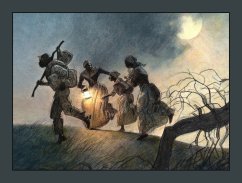
Today, I got to teach about one of the most interesting occurrences that ever happened more than once: the treacherous trip slaves took on their way to possible freedom via the underground railroad. While it was prompted by necessity and the unending need of each slave to gain a freedom that was supposedly guaranteed to everyone since the founding of the nation, it was also a journey of self-discovery and an exercise in trust.
The vast majority of my summer school students are not of African descent, so that makes it an even more interesting discussion, and one I truly enjoy relating to them. It’s a true shame that it had to happen, but that journey created bonds that were unbreakable, between slave and slave, between slave and free men, between slave and abolitionist, and between slave and family. Having to trust others for safe passage was either a complete success or a complete failure, but stepping outside of themselves to trust others was a huge step toward true freedom regardless.
Most students were interested in the white people who were involved in seeing the slaves safely to freedom. They seemed stuck on the idea that whites and blacks were opposed, which was not always the case. In fact, most of the trips on the underground railroad would probably have failed if not for rich white benefactors who gave up time, space, and money to ensure the African-Americans who were riding on the railroad a better chance at being free. These abolitionists included some of the richest men on the East coast, all of whom were white.
To the students, it had been about black and white, but they finally began to see the gray areas, and that’s wonderful to see it show up in their eyes. Next week we get to solidify that new view by taking them on a field trip to the Gerrit Smith Estate to see the place where many slaves continued their paths to freedom. I can’t wait.
Sam
 Sam's Online Journal